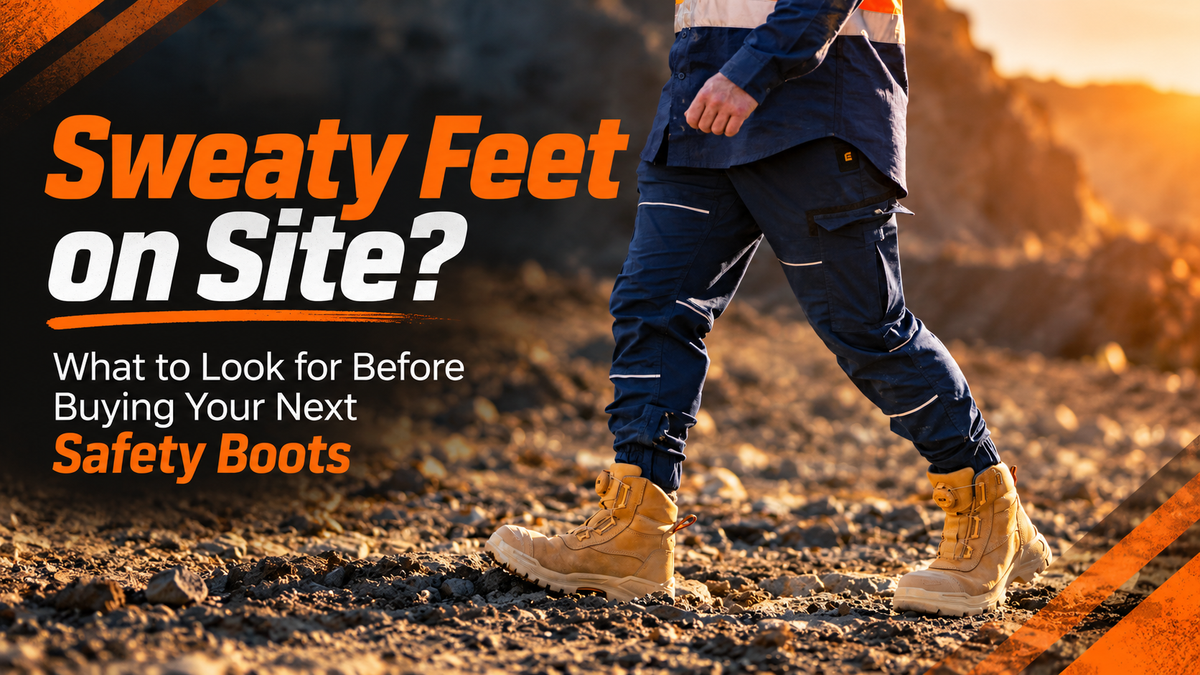
It's barely smoko and your socks already feel damp.
By lunchtime, your feet are hot. By knock-off, all you want to do is get your safety boots off.
For Australian tradies working through summer, sweaty feet can turn an ordinary shift into a long one. Your boots may not be the only reason you're sweating, but the way they're constructed, how they fit and the materials inside them can make a noticeable difference to how heat and moisture are managed.
So before buying another pair based on brand, price or looks alone, here's what to check.
Why Do Feet Sweat So Much Inside Safety Boots?
Your feet naturally produce sweat to regulate temperature. Put them inside enclosed safety footwear during a hot Australian working day and that moisture needs somewhere to go.
Traditional safety boots can include thick leather, protective toe caps, internal linings, cushioning and heavy-duty outsoles. Those features serve important purposes, but airflow can vary considerably between different designs.
Add long hours, physical work and summer temperatures, and your socks can quickly become damp.
Why Sweaty Work Boots Can Become a Bigger Problem
Damp feet aren't simply annoying.
Moisture combined with repeated movement can increase friction inside your footwear. That can contribute to rubbing, hot spots and blisters, particularly during long shifts.
Moisture can also contribute to unwanted odours inside frequently worn footwear, especially when boots don't have enough time to dry properly between shifts.
If you're regularly working in hot conditions, moisture management deserves a place on your safety boot checklist.
1. Look for Breathable Work Boot Linings
Start inside the boot.
Some safety footwear uses breathable or moisture-managing linings designed to help move perspiration away from the foot. This can be particularly useful for tradies working long summer shifts.
Don't assume every leather work boot manages moisture in the same way. Check the product specifications for details about the lining and internal materials.
2. Consider Lightweight Safety Boots
Summer is also a good time to question whether you need one of the heaviest boots on the shelf.
Modern lightweight safety boots can combine workplace protection with materials designed to reduce unnecessary bulk.
This can be especially useful for warehouse workers, electricians, drivers, maintenance workers and tradies who spend much of their shift walking.
Browse Work Boots Direct's safety footwear range and compare different constructions before choosing your next pair.
3. Steel Toe or Composite Toe for Summer?
Both steel and composite toe caps can provide workplace protection when the footwear meets the required safety standard. The better option depends on your workplace and the specific boot.
Steel Toe Caps
Steel toe safety boots remain a common choice across Australian construction, manufacturing and industrial workplaces. They're proven, widely available and found across a huge range of boot styles.
Composite Toe Caps
Composite safety toes are made from non-metallic materials. One of their attractions is the potential for lighter footwear, depending on the overall construction of the boot.
If reducing boot weight is important during long summer shifts, composite toe safety boots are worth comparing with traditional steel cap options.
4. Don't Ignore Your Work Socks
You can buy breathable safety boots and still undermine them with the wrong socks.
Heavy socks that hold moisture against your skin may leave your feet feeling damp for longer. Look for work socks designed to manage moisture and choose a thickness that works with both the season and your boot fit.
And don't underestimate the value of a fresh pair.
For particularly long or hot shifts, keeping spare socks in the ute or locker can make the second half of the day considerably more pleasant.
5. Check Whether the Footbed Is Removable
A removable footbed can be useful during summer because you can take it out after work and allow both the footbed and boot interior to air separately.
It also makes it easier to inspect the inside of your footwear for accumulated moisture, wear or odour.
If you're comparing two otherwise similar safety boots, this small feature can be worth considering.
6. Make Sure Your Boots Aren't Too Tight
A tight boot isn't automatically a secure boot.
Your toes should have enough room to move naturally without hitting the safety cap, while your heel should remain secure as you walk.
Remember that feet can feel fuller after you've spent hours standing and walking. A pair that already feels cramped when you first try it on is unlikely to become a better summer option after an eight or ten-hour shift.
7. Safety Sneakers May Suit Some Workplaces
Not every job requires a traditional high-cut safety boot.
For warehouses, logistics, driving and some indoor environments, a low-cut safety shoe or safety sneaker may provide a lighter alternative, provided it meets your employer's and site's safety requirements.
Modern safety sneakers can include composite toe protection, slip-resistant outsoles and lightweight materials while maintaining a more athletic profile.
If you're walking thousands of steps across a warehouse floor every day, they're worth considering.
8. Don't Sacrifice Safety Just to Get a Cooler Boot
Breathability matters, but your first question should still be: does this footwear meet the requirements of my job?
Depending on your workplace, you may need features such as:
- Safety toe protection
- Slip-resistant outsoles
- Electrical hazard protection
- Heat-resistant outsoles
- Water resistance
- Scuff protection
- Additional ankle coverage
A lightweight summer safety shoe isn't the right choice if your site requires features it doesn't provide.
9. Give Your Boots Time to Dry Between Shifts
Even good moisture-managing footwear needs time to dry.
After work, loosen the laces or open the zip, remove the footbeds where appropriate and allow your boots to air naturally in a well-ventilated area.
Avoid putting them directly against excessive heat unless the manufacturer's care instructions specifically allow it, as high temperatures can affect some footwear materials, adhesives and components.
What Should You Look for in Summer Safety Boots?
If sweaty feet are one of your biggest frustrations on site, use this checklist before buying:
- Breathable or moisture-managing lining
- Lightweight construction
- Correct fit with enough toe room
- Composite toe option where suitable
- Removable footbed
- Adjustable laces or fastening
- Slip-resistant outsole
- Protection appropriate for your workplace
Buy for the 3 PM Heat, Not Just the 6 AM Start
That pair might feel great when you put it on first thing in the morning. The real test is how it feels after hours of walking, standing and working through an Australian summer day.
When you're choosing your next pair, look beyond the brand name. Compare breathability, weight, internal materials, fit and the safety features your workplace actually requires.
Your feet still have several hours of work ahead of them after lunch.
Shop safety boots at Work Boots Direct and compare options for hot Australian working conditions.