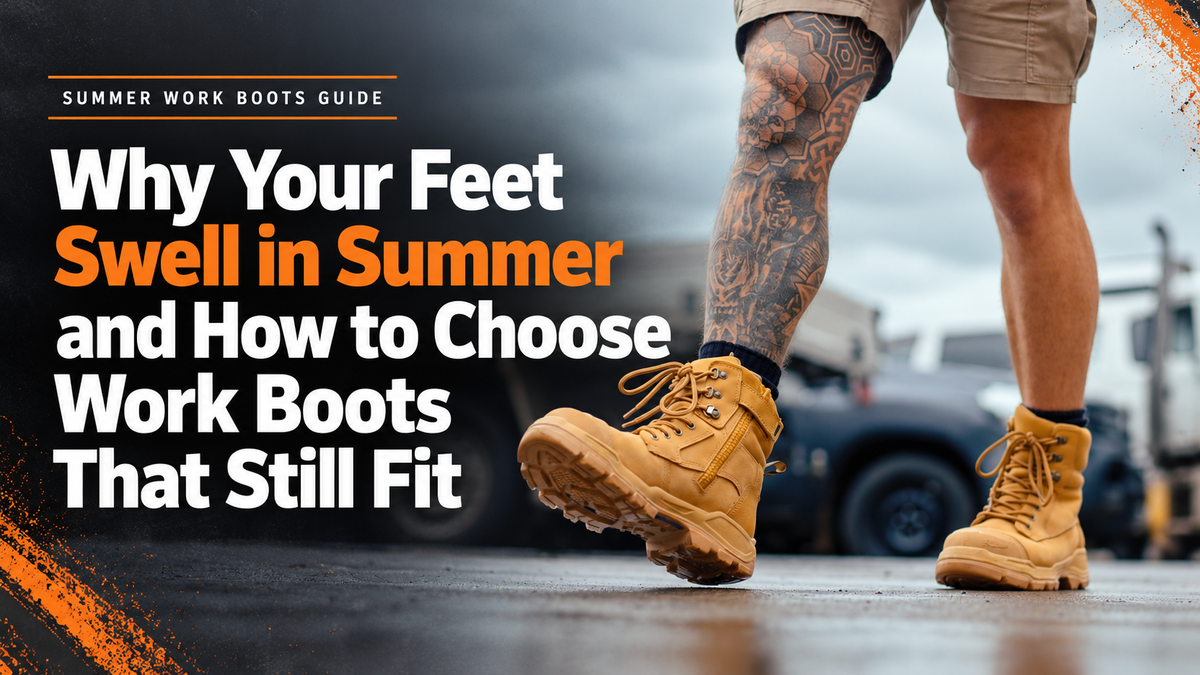
Your boots felt fine at 6:30 am. By 3:00 pm, your toes are cramped, the sides feel tighter and you cannot wait to get them off.
If that sounds familiar, don't automatically assume you bought the wrong size. Long hours standing and walking can contribute to fluid building up in the feet and lower legs. Add an Australian summer shift to the equation and a pair that feels right first thing in the morning may feel very different by knock-off.
The answer isn't simply buying oversized boots. You need the right fit, enough room around the toes, adjustable support and materials suited to long, hot working days.
Why Do Your Feet Feel Bigger Later in the Day?
Workers who spend most of the day standing or walking can experience temporary swelling in their feet and ankles. This happens when fluid accumulates in the lower extremities after hours on your feet.
For a tradie, that can turn a slightly snug morning fit into pressure around the toes, sides and top of the foot later in the shift.
It can become even more noticeable when you're spending the day moving between construction sites, climbing ladders, carrying materials or walking across large warehouses.
5 Signs Your Safety Boots Are Too Tight for Summer
- Your toes begin touching the safety toe cap later in the day.
- You develop pressure or rubbing around the widest part of your foot.
- Your socks leave unusually deep marks after work.
- You get recurring hot spots or blisters during longer shifts.
- The boots feel fine at clock-on but noticeably uncomfortable by knock-off.
Don't ignore persistent pressure. A boot that continually rubs or squeezes your foot isn't suddenly going to become the right fit because you've worn it for another month.
Don't Make the Mistake of Simply Buying a Bigger Size
This is where plenty of buyers get caught.
If your current pair feels tight after several hours, jumping straight to a full size larger can create another problem. Your heel may start moving inside the boot and your foot can slide forwards as you walk.
Instead, concentrate on fit.
As a general fitting guide, you want approximately 1 cm between your longest toe and the end of the boot. Your heel should remain secure, your toes shouldn't hit the steel or composite toe cap, and there shouldn't be painful pressure points around the foot.
Look for Adjustable Work Boots
For workers whose feet feel tighter as the day progresses, lace-up and lace-and-zip designs have a major advantage: adjustment.
You can establish a secure fit in the morning without crushing the foot, then adjust the laces when required. A side zip still gives you the convenience of getting the boots on and off quickly.
This can make zip-and-lace safety boots particularly useful for long summer shifts.
Choose Breathable Materials for Hot Conditions
Fit isn't the only consideration. Heat and perspiration trapped inside your footwear can make an already tight pair considerably less pleasant to wear.
When comparing hot weather work boots, look for features such as:
- Breathable uppers or linings
- Moisture-wicking internal materials
- Removable or breathable footbeds
- Lightweight construction
- Secure but adjustable fastening
These features won't prevent normal changes in foot size during a long day, but they can help manage heat and moisture inside the boot.
Consider Composite Toe Safety Boots for Summer
If your workplace requires toe protection, don't assume steel is your only option.
Composite toe safety boots use non-metallic protective caps and can provide a lighter alternative to traditional steel toe cap footwear. Depending on the model, composite caps can also insulate against heat and cold.
For tradies who spend thousands of steps on their feet each shift, reducing unnecessary boot weight can be worth considering.
What About Safety Sneakers?
Not every worker needs a traditional 150 mm work boot.
Warehouse staff, couriers, drivers and workers who spend much of their day walking on relatively even surfaces may prefer lightweight safety sneakers or low-cut safety footwear, provided the style meets the safety requirements of their workplace.
The lower profile can provide greater freedom of movement, while modern models are available with composite toe protection, slip-resistant outsoles and breathable materials.
When Should You Try On New Work Boots?
If possible, don't judge fit solely when your feet are completely rested.
Try your new pair with the same type of work socks you normally wear and spend enough time walking in them to check the important pressure points.
Before buying, ask yourself:
- Can I move my toes naturally?
- Is there enough space before the safety toe cap?
- Does my heel stay securely in position?
- Is anything rubbing the sides or top of my foot?
- Can I adjust the fit if my feet feel fuller later?
A little extra attention during fitting can save you from spending an entire summer regretting the wrong pair.
Your Summer Boots Should Still Feel Right at 3 PM
A safety boot shouldn't only fit for the first hour of your shift.
If your current pair becomes painfully tight every afternoon, leaves pressure points or has your toes fighting the cap by knock-off, start looking at the fit rather than simply putting up with it.
Prioritise enough toe room, a secure heel, breathable materials, lightweight construction and adjustable fastening where appropriate.
Shop work boots at Work Boots Direct and compare options for your trade, site requirements and summer working conditions.
Don't buy for how your feet feel at clock-on. Buy for how they'll feel by knock-off.