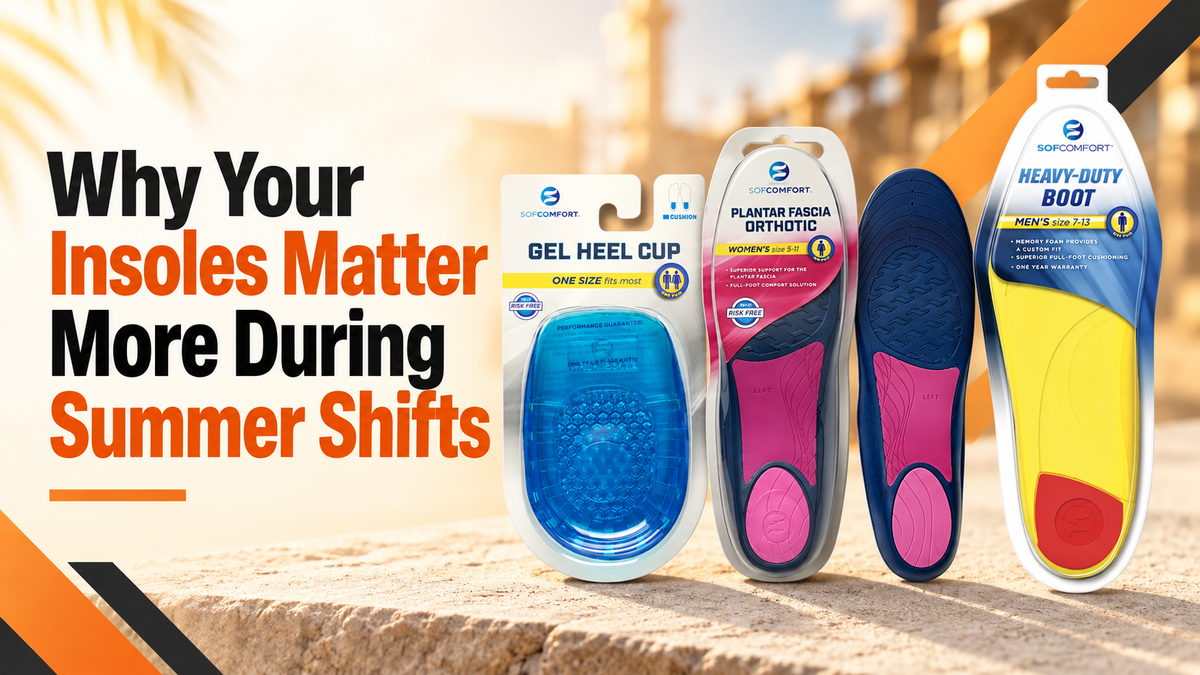
You can spend plenty on a good pair of safety boots and still finish the day wondering why your feet feel cooked.
During an Australian summer, most attention goes to the outside of the boot. Is it lightweight? Is the outsole suitable for the job? Does it have a steel or composite toe?
But there's another part of the boot carrying your weight for thousands of steps every shift: the insole.
When you're standing on concrete, climbing ladders or walking across a warehouse for eight, ten or twelve hours, the footbed underneath your feet can influence cushioning, fit and how moisture feels inside your footwear.
What Does a Work Boot Insole Actually Do?
The insole, sometimes called the footbed, sits directly underneath your foot. Depending on the safety boot, it can provide cushioning, help manage moisture and contribute to the overall fit of the footwear.
That becomes particularly noticeable during long shifts on hard surfaces.
An old, flattened or poorly fitting footbed may leave the boot feeling very different from when you first bought it, even when the outsole still looks serviceable.
Why Do Insoles Matter More During Summer?
Hot working conditions create another challenge: sweat.
Your feet naturally perspire, and enclosed safety footwear can trap heat and moisture. During a long summer shift, your socks and footbeds are directly exposed to that moisture for hours.
This is why it's worth looking beyond cushioning alone when comparing work boot insoles.
Breathability, moisture management and whether the footbed can be removed for drying can all be useful considerations for summer work.
1. Your Insoles Deal With Sweat All Day
Think about where perspiration goes once it reaches the bottom of your foot.
Your socks absorb some of it. Your footwear lining manages some. Your footbed is also sitting underneath it for the entire shift.
When choosing safety boots for summer, look for footbeds made with breathable or moisture-managing materials where available.
A removable footbed is particularly practical because it can be taken out after work and allowed to air separately from the boot.
2. Flattened Insoles Can Change How Your Boots Feel
Remember how your boots felt when they were new?
After months of regular use, the cushioning inside them can compress. You may notice that hard floors feel harder, your feet feel more tired after work or the fit simply doesn't feel the same.
Don't automatically assume the entire boot has reached the end of its life.
Take a look inside first.
If the removable footbed is heavily compressed, damaged or worn through, check whether the manufacturer offers a suitable replacement.
3. Hard Concrete Makes Cushioning Worth Considering
Concrete doesn't give much back.
For warehouse workers, mechanics, construction workers and tradies who spend most of the day on hard surfaces, cushioning can become particularly noticeable towards the end of a long shift.
Look for safety footwear with a supportive footbed and midsole system designed for prolonged standing and walking.
It's important to look at the entire boot rather than assuming a thick insole alone will solve every problem. The outsole, midsole, fit and overall construction all contribute to how footwear feels underfoot.
4. Don't Just Buy the Thickest Insole You Can Find
More cushioning isn't automatically better.
Adding an aftermarket insole that is significantly thicker than the original can reduce the available space inside your boot. Your heel may sit higher, your toes may move closer to the safety cap and the overall fit can change.
That's particularly important with steel toe cap and composite toe safety boots, where the protective cap itself doesn't stretch to accommodate a tighter fit.
If you're replacing the original footbed, choose an option suitable for the footwear and check the manufacturer's recommendations.
5. Your Insole Can Affect Boot Fit
If your safety boots suddenly feel tighter after changing the footbed, don't ignore it.
Your toes should have enough room to move naturally, your heel should remain secure and you shouldn't feel excessive pressure across the top or sides of your foot.
Summer can make fit particularly noticeable because feet may feel fuller after hours of standing and walking.
Adding a bulky footbed to an already snug boot could make that afternoon pressure worse.
6. Removable Footbeds Make Summer Boot Care Easier
One of the simplest features to look for when buying your next pair is a removable footbed.
After your shift, remove it where appropriate and allow the boot and footbed to air in a well-ventilated location.
This gives moisture more opportunity to escape before you're putting the same footwear back on the following morning.
It also makes it much easier to inspect the footbed for wear.
7. Insoles, Socks and Boots Need to Work Together
Your footbed isn't working alone.
During summer, your socks, insole and boot lining all influence what happens to moisture inside your footwear.
For hot conditions, consider work socks designed to manage moisture rather than simply choosing the thickest pair available.
The thickness matters too. A much thicker sock can reduce internal boot space in the same way that an oversized aftermarket footbed can.
8. Lightweight Boots Can Help on High-Step Days
If your job involves constant movement, don't focus solely on what's underneath your foot.
The overall weight of your safety footwear matters too.
Modern lightweight safety boots and safety shoes can be worth considering for workers who spend much of their shift walking. Composite toe safety boots are another option to compare where they're appropriate for your workplace requirements.
The goal isn't simply finding the lightest pair available. It's finding footwear that combines the protection your job requires with a fit and construction suited to the way you actually work.
When Should You Replace Your Work Boot Insoles?
There's no single replacement schedule that applies to every tradie. Someone wearing the same boots for ten-hour shifts on concrete will use their footwear differently from someone who spends much of the day driving.
Instead, inspect your footbeds regularly and watch for:
- Visible compression or flattened cushioning
- Tears or damaged material
- Permanent unpleasant odour that cleaning and drying doesn't resolve
- Uneven wear
- A noticeable change in how the boots feel underfoot
If you're experiencing persistent foot pain, numbness or other symptoms, don't assume changing an insole will fix the underlying cause. Consider seeking advice from an appropriate healthcare professional.
What to Look for in Your Next Pair of Summer Safety Boots
If you're shopping for footwear before the hottest part of summer, look at more than the outside of the boot.
- Removable footbed where available
- Breathable or moisture-managing internal materials
- Suitable underfoot cushioning
- Secure fit without excessive pressure
- Lightweight construction where appropriate
- Steel or composite toe protection required for your job
- Slip-resistant outsole suited to your workplace
- Safety features required by your site or employer
Before You Replace Your Boots, Look Inside Them
Sometimes the part of your safety footwear that's causing frustration isn't the part you can see.
If your boots feel harder underfoot than they used to, stay damp between shifts or simply don't feel the same after months of work, inspect the footbeds.
And when you're buying your next pair, don't judge them only by the leather, toe cap or outsole. Take a closer look inside.
Because at 3 pm on a 35°C summer day, what's underneath your feet matters just as much as what's protecting them from the outside.
Shop work boots at Work Boots Direct and compare safety footwear suited to long Australian summer shifts.